

Are dark stores the future of retail?
Stores with no customers, no tills and no signage, built only to fulfil online orders. What they solve and what they demand from the supply chain.
4 min readby Marketing Team
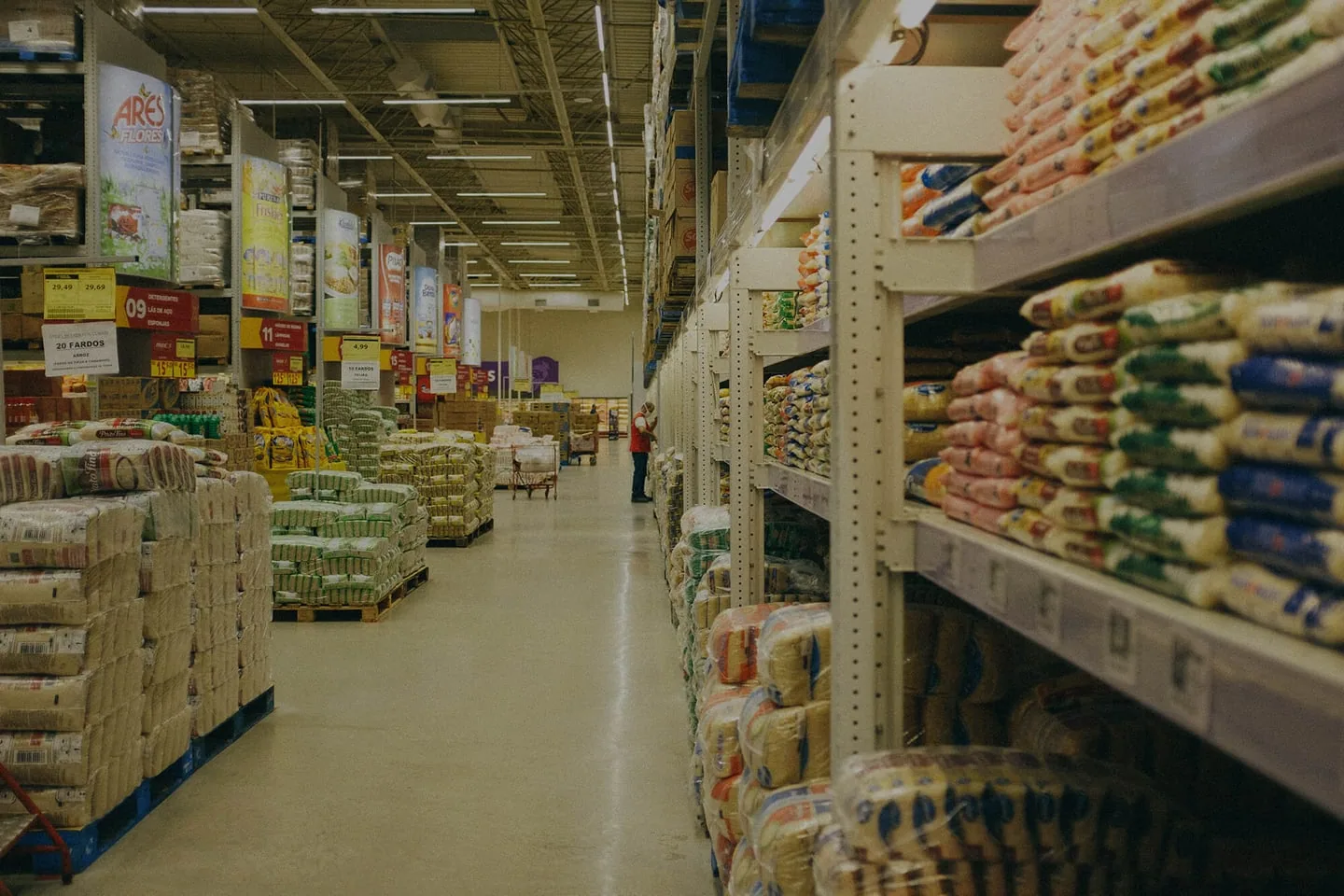
In the United States, the pandemic forced retailers to expand through e-commerce, and with it came a sharp rise in the number of dark stores.
A dark store is a traditional retail outlet turned into a local distribution centre. It looks like a store, but every feature is arranged around fulfilling online orders. Staff pick products from the shelves exactly as in a supermarket — but there are no customers, no tills and no promotional material. They do not serve the public. Their goal is to cut delivery times and make the online shopping experience fast.
How they work
- The purchase order arrives at the dark store.
- The items in the order are picked.
- The shipment goes to logistics, where it is separated by category.
- The products are packed.
- The order is dispatched, with in-house logistics or last-mile carriers.
The format predates the pandemic: the first dark store opened in 2006, by Tesco in Croydon, UK. Today they exist everywhere. In Europe, the supermarket chain Dia has been testing the model since 2018 in Madrid and Barcelona. In Latin America, Walmart opened the region’s first dark stores in Santiago de Chile to serve orders from apps such as Lider.cl and Cornershop, and the last-mile company PedidosYa opened its first one in Montevideo in May 2020.
The benefits
Delivering to thousands of homes requires centralised logistics and distribution, which is exactly what this format makes easier.
Additional capacity

Unlike a conventional point of sale, dark stores add capacity: they can pack, deliver and hand over goods in areas with high order density, dispersing shoppers to alternative locations.
Variety and availability

A dark store typically runs between 100,000 and 200,000 square feet, enough to stock the full range and hold better availability than a traditional store.
Efficient inventory management remains the hard part. Prisma Smart Supply suggests replenishment based on demand forecasts, inventory levels, supplier lead times and available space, so the same catalogue can be served without swinging between stock-outs and overstock.
Increased efficiency

With new technology in loading, storage and picking, dark stores raise the number of units delivered and run a leaner operation. Prisma Assortment contributes by suggesting which products to list and delist, and how to group stores by market trends, performance, inventory and display.
Higher precision, 24/7

Dark stores have improved delivery accuracy by integrating technology across suppliers and logistics systems, and they can deliver at whatever time suits the customer, because they operate every hour of every day.
Product classification accuracy is part of that. The Prisma Item Master module structures the collaborative process between buyers and suppliers, defining who completes each stage — without anyone maintaining a spreadsheet.
Space optimisation and new opportunities

In a dark store, retailers can offer products that customers would never find in a traditional outlet, simply because the shop floor has no room for them. Prisma suggests the optimal display for each category and product based on performance, sales volume and available space.
The future of retail
Industry experts describe dark stores as the beginning of a broader trend, not the end of one.
The format brings real challenges: the supply chain, an omnichannel pricing strategy, promotions that do not overlap, efficient distribution, and the analysis of omnichannel data. With Prisma it is possible to manage price types by product and point of sale, set competitive positioning rules from external competitor data, and define minimum and maximum limits that raise alerts against a competitor, a set of competitors or a margin rule.
Every company needs a technical solution that automates processes and centralises data from every sales and distribution channel. Dark stores can improve the customer experience and speed up access to essential items — but only alongside the digital transformation that makes them work.