
Why do some promotions have no impact on sales?
60% of promotional displays are flawed, per Harvard Business Review — four challenges behind that number, and what makes a promotion measurable.
3 min readby Marketing Team
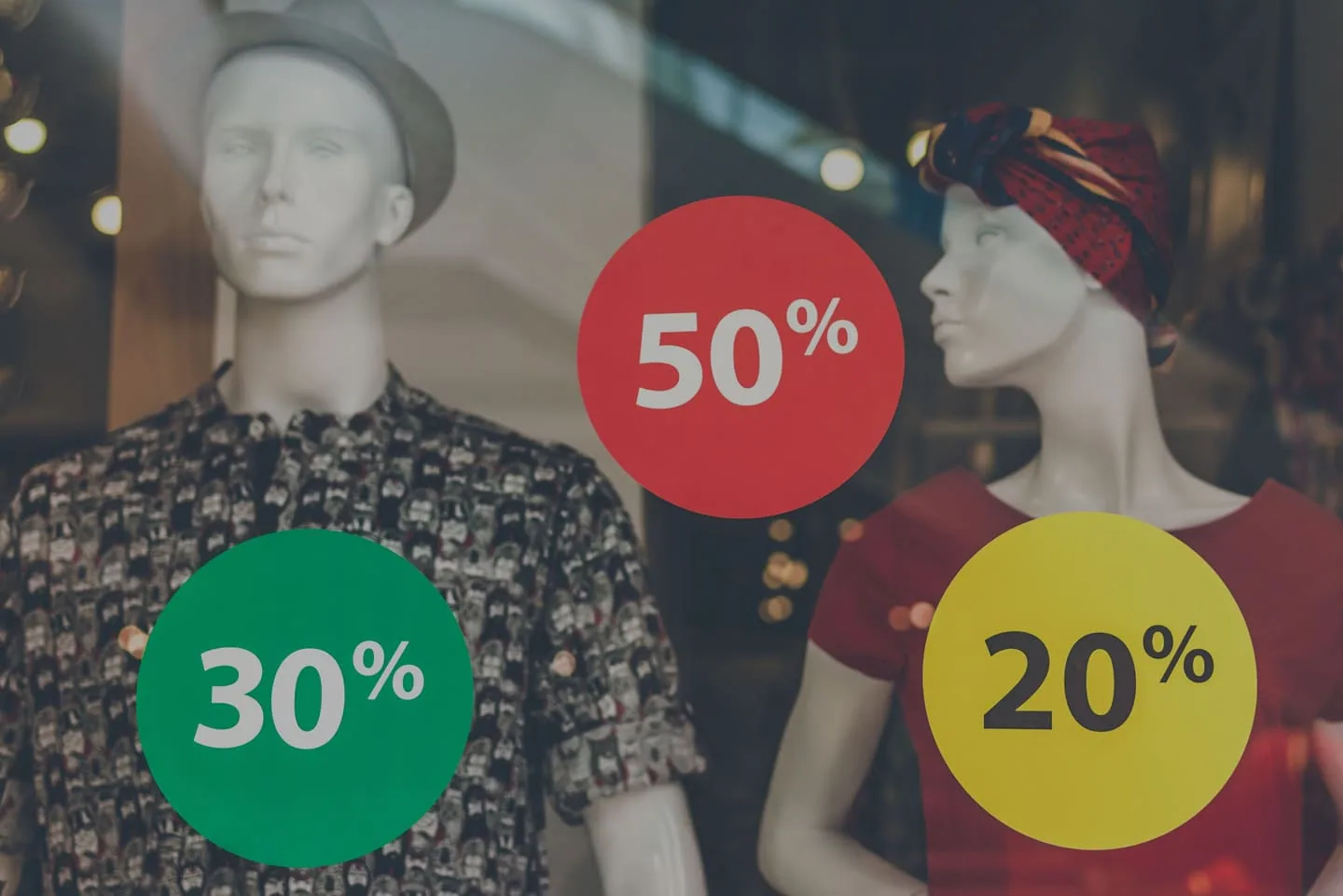
Has your company ever run a promotional campaign only to find that, after months of planning, the display materials went up in the wrong spot, on the wrong product, or overlapping with another promotion? According to Harvard Business Review, 60% of promotional displays are flawed, and more than half of promotions have no impact on sales. Catching those errors before launch is often the difference between a promotion that works and money spent for nothing.
The four challenges retailers face

- Combining multiple, complex promotions in a single campaign. What happens when a customer wants to stack more than one available discount? Many systems cannot accurately calculate complex promotions in real time or support combining several in a single transaction — the result is an unhappy customer, a frustrated employee and a lost sale.
- Running promotions across multiple sales channels. Retailers typically rely on separate operational systems per channel — one for e-commerce, another for physical stores. Decentralised systems are slow and inefficient: offering the same promotion everywhere means re-entering the same data into every POS system, which limits how strategically offers can be tailored and makes centralised analysis harder.
- Increasing margins while measuring ROI. Pricing a lead product below the norm can be an efficient strategy, but the point of a promotion is to stimulate sales while improving margin and positioning — and in most retailers’ systems, it is genuinely hard to tell which promotions are working, which customers generate the most revenue, or whether a loyalty programme is even profitable.
- Managing loyalty and rewards programmes. Loyalty programmes exist to build and keep customer loyalty, but many companies lack the reporting to measure their performance accurately. Launching one takes time, creativity and money, so it has to meet both the customer’s and the retailer’s expectations — which requires the data to know whether it is actually increasing purchase frequency and sales.
A solution to optimise promotional campaigns
Promotions are critical enough to a retailer’s results that they need to be managed efficiently and flexibly, with a continuous read on ROI. With Prisma Promotions you can measure campaign success while eliminating the operational errors above — the module also suggests promotional mechanics to drive traffic and lift average ticket size, and compares pre- and post-promotion sales against marketing spend to calculate the incremental profitability of each promotion.

Some of the mechanics that get measured:
- Direct discount. A fixed amount or percentage applied to the final price — “30% off” or “$150 off”.
- Get A, pay B. Discount mechanics where A units are purchased and B are paid — 2x1, 3x2, 4x3, and so on.
- Discount by quantity. Applies when more than one unit of the same product is purchased — “80% off the second unit”.
- Restriction by units. A maximum quantity caps how many units qualify for the discount; a minimum quantity sets how many have to be purchased before it applies — “15% off if you buy 3” requires entering 3 as the minimum.
- Restriction by amount. A minimum monetary value sets the purchase threshold for the promotion to apply — “10% off purchases over $1,000” requires entering 1,000. A maximum monetary value caps how much of the purchase qualifies — “10% off purchases up to $1,000” on a $1,500 purchase leaves the extra $500 without the discount.
Conclusion
Promotions can be powerful tools for both retailers and producers to grow sales and build loyalty. The key is establishing mechanics that are attractive and effective, backed by the data needed to move past guessing at the “ideal price”. With the right tools and approach, retailers can deliver a unified shopping experience, strengthen the brand-customer relationship across channels, and make the most of every sales opportunity.