

Price perceptions, consumer choices and the compromise effect
Customers know their basket's price less often than they think — what the compromise effect means for assortment and pricing strategy.
2 min readby Lucas Gorganchian
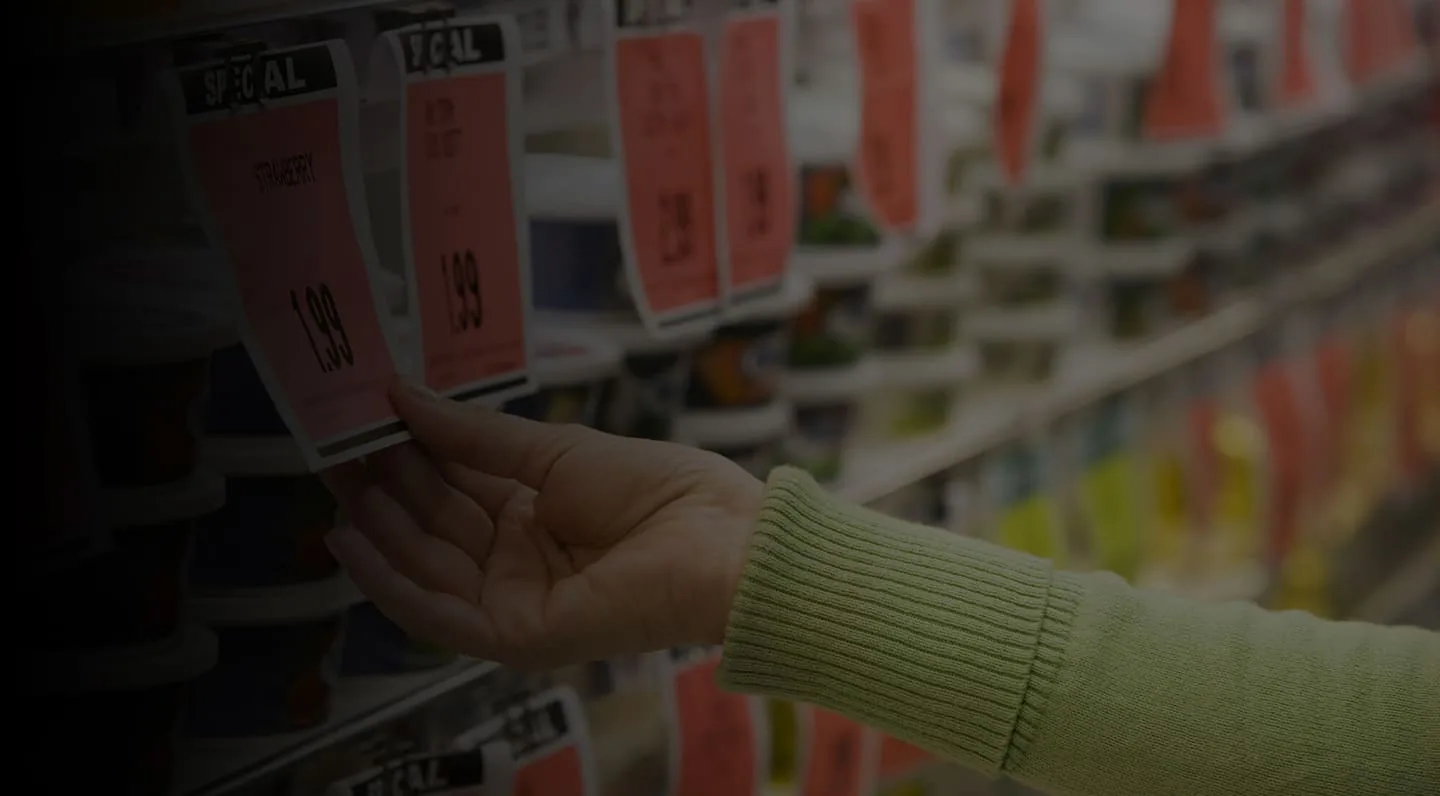
António Damásio, in his book Descartes’ Error, argues that emotions both guide and bias behaviour and decision-making. One of the examples he uses is the compromise effect: a behavioural pattern by which customers often pick the mid-priced option to protect themselves from making a bad choice.

According to Catherine Tucker, MIT Sloan Professor of Management Science and Marketing, that effect should not just be treated as a decoy option. It is also an opportunity to target high-value customers directly.
Customers know less than they think
Many pricing decisions are driven by something simpler: consumers do not actually know what things cost. An MIT study interviewed shoppers waiting in line and found that while 80% thought they knew the price of the products in their basket, only 50% actually did.
We ran a similar survey at Prisma. While a shopper was picking a product off the shelf, we asked whether the price they were paying felt fair, and whether it was something they usually bought. Of the respondents who said the price was cheaper at a competitor, 45% were wrong.
Adding an option changes the outcome
In a classic experiment by Kivetz, Netzer and Srinivasan (2004), MBA students were offered a subscription to The Economist in three forms: print only ($125), web only ($59), or print and web ($125). Hypothetical subscriptions to print and web jumped from 43% — when the web-only option was absent — to 72% once it was added.
The implication: a firm can increase profits by adding a high-priced option, or a bundle, to an existing product line — even one nobody expects to sell much of on its own.
Where this lands
At Prisma we argue for combining business rules, machine learning and A/B testing, among other techniques, to deliberately design pricing and assortment strategy — and, in doing so, increase margins rather than leave them to how a shelf happens to be laid out.