
COVID-19: let's buy it all NOW!
Panic buying is not irrational — it is the Tragedy of the Commons playing out on a supermarket shelf. What that means for forecasting retail sales.
3 min readby Gustavo Sappia
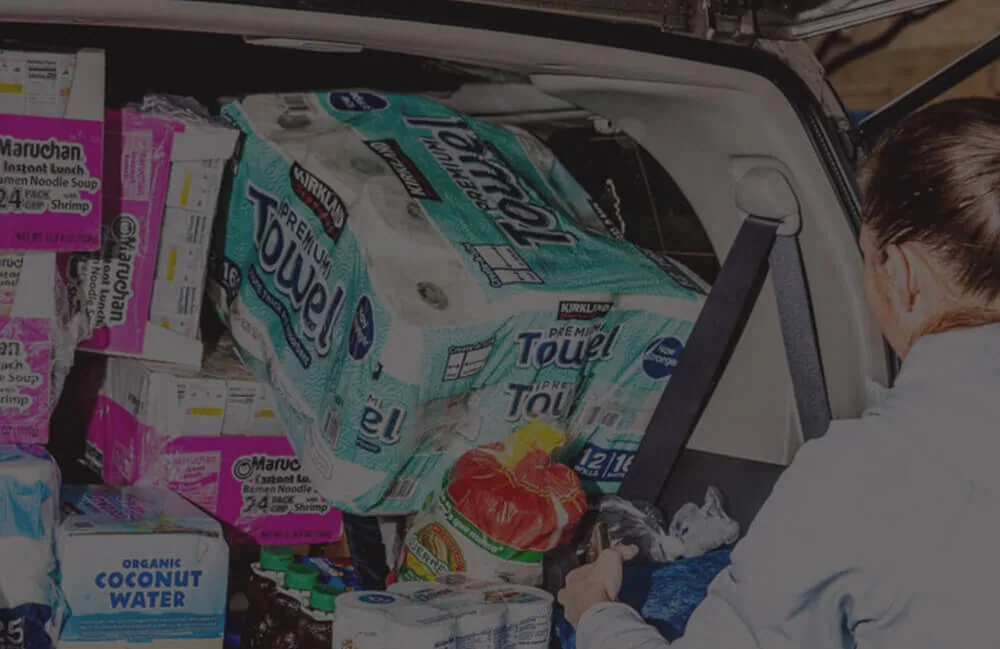
Fights, despair, anxiety, and many other emotions are being exposed in retail stores nowadays. We all have seen images and videos of consumers stocking (or stalking?) toilet paper and other goods in most countries hit by COVID-19, suggesting the apocalypse of basic goods. Some people are horrified by the scenes. However, far from surprising, this is the expected behavior predicted by classic economic theory.
The lake and the fish
Imagine you live near a big lake, and your source of income — same as your neighbors’ — comes from fishing: the more you fish, the higher your income. The rational solution would be to fish as much as possible and invest what you do not consume into buying assets allowing you to fish more and more.
As all neighbors think the same, and all neighbors know that all neighbors think the same, at some point the resource will deplete and the fish will not reproduce any longer. This is called the Tragedy of the Commons (ToC): individuals acting according to their own self-interest, behaving contrary to everyone’s best interest — namely to keep the resource at sustainable levels so that we can all fish forever, or at least for longer.
The ToC was widely studied since the 60s, which gave the Nobel Prize to Elinor Ostrom, the first woman to receive such a distinction within the field of Economics. Ostrom and other researchers showed that under certain institutional arrangements and circumstances, the ToC could be avoided, and that differences in individuals’ cooperative behavior lead to better outcomes than the apocalypse.

Why this is a retail problem
The ToC and the myriad of studies following Ostrom’s explain a dynamic and its outcome for when the resource is limited by a reproduction function. Retail stores are also limited by supply, and consumers by their — intertemporal — income. Eventually, when the quarantine hits us all and income is only spent on retail stores, we will be back to the lake and the fish.
The question is not whether, it is when
“So? We don’t need to know all this to predict sales: under COVID-19 eventually all will be sold”, one would naively think. Indeed, but as always, what matters is when: when does this ToC dynamic start and trigger?
When it comes to predicting sales, the question for us — data scientists in the retail sector — is to calibrate our observations:
- When will supply reach zero? And disposable income?
- How many predators, meaning those consumers that want to get it all now, do we find along the timeline tagged as “crisis time”?
- How many of them do we expect to change their behavior on the way and become more cooperative?
- How does predatory versus non-predatory consumer behavior translate into sales over time? Non-predators give rest to the supply.
These are some of the many questions we address at Prisma when analyzing consumer behavior to inform our clients.
A remark: in Spanish, ToC are the initials for “Obsessive Compulsive Disorder”.